

“You’re only here for a short visit. Don’t hurry, don’t worry. And be sure to smell the flowers along the way.” – Walter Hagen
November is National Alzheimer’s Disease Awareness Month—a time to turn awareness into compassion, support families, and explore what research can teach us about brain health and care.
This post is dedicated to every family affected by Alzheimer’s disease. Behind every diagnosis is someone deeply loved—and a family navigating profound change.
 Alzheimer’s disease is a condition that gradually damages and destroys nerve cells (called neurons) in the brain. Often described as a disease that steals a person’s sense of self, this condition has affected people for centuries.
My mother died of Alzheimer’s disease almost 10 years ago. Since then, I’ve explored the research to better understand what happened to her—and what might help other families. (See previous posts: Alzheimer’s Disease Awareness and Aromatherapy Memory Care, Aromatic Dementia Care.)
Memory loss can leave families feeling powerless. Research on the sense of smell may offer insights into brain health and everyday care—not a cure, but a promising area of study.
Some researchers are investigating whether nasal pathways play a role in Alzheimer’s disease. Here, I explore that emerging science and what it may—and may not—mean for aromatherapy and sensory care.
Key Facts About Alzheimer’s Disease
Losing a human mind — the gradual deterioration of a lifetime’s worth of wisdom, experience, and personal relationships — is a tragedy.
Alzheimer’s Disease (AD) is a progressive brain disorder that gradually impairs memory, thinking, and the ability to carry out daily activities. Symptoms typically start gradually and worsen over time. In later stages, individuals require full-time care for basic activities like eating and walking. 
More than 7 million Americans are living with Alzheimer’s disease, the most common form of dementia. That’s nearly one in nine. As a result, it is the most costly chronic medical condition in America. This number is projected to climb to nearly 13 million by 2050 and 13.8 million by 2060.
As our population ages, most people diagnosed are 65 or older. For many of us, its challenges are firsthand—whether we care for a loved one or live with the disease ourselves. Nearly 13 million Americans provide unpaid caregiving services for individuals living with Alzheimer’s or other dementias.
Alzheimer’s is officially ranked as the 6th leading cause of death in the United States, and claims more lives annually than breast cancer and prostate cancer combined.
Amyloid Plaques – Impact on the Brain
Alzheimer’s disease, the most common form of dementia, is marked by two characteristic changes in the brain: the buildup of amyloid plaques between nerve cells and tau tangles within them. 
These protein accumulations are among the most widely studied hallmarks of the disease.
Beta-amyloid is a protein found in the fatty membrane surrounding nerve cells. In a healthy brain, the brain regularly clears beta-amyloid, but in Alzheimer’s disease, it accumulates and forms sticky plaques.
Tau protein helps maintain nerve cells’ structure and function. In a healthy brain, tau stabilizes tiny internal structures called microtubules, which help transport nutrients and other materials within cells.
In Alzheimer’s disease, tau can detach from these structures and form twisted strands called tangles. These changes disrupt the cells’ transport system and contribute to nerve cell damage and death.
Plaques and tangles interfere with brain cell function and contribute to cell damage and death.
- Disrupted Communication: Plaques build up between neurons, blocking normal synaptic signaling.
- Inflammation and Damage: Plaques can trigger inflammation and cellular stress, further impairing nerve cell function.
Early Warning Signs to Watch For
Advancing age is the primary risk factor for Alzheimer’s disease; however, Alzheimer’s is not a normal part of aging.
Families often notice memory loss first. But an important question deserves attention: What happens in the brain before those memories begin to fade?
If you are observing behavioral shifts, the Alzheimer’s Association advises watching for:
- Disruptive Memory Loss: Forgetting recently learned information or asking the same questions repeatedly.
- Executive Function Challenges: Struggling to follow a familiar recipe, manage monthly bills, or focus on multi-step tasks.
- Disorientation: Losing track of dates or seasons, or becoming confused about how they got to a specific location.
- Social Withdrawal or Mood Shifts: Uncharacteristic personality shifts, increased suspicion, anxiety, or withdrawal from long-held hobbies.
- Loss of smell (anosmia).
Memory Loss
Alzheimer’s is a devastating disease with no cure yet. For a long time, we’ve assumed Alzheimer’s was just an unavoidable part of getting older. 
- Genetics and Family History: having a first-degree relative (parent or sibling) with the disease increases risk.
- Cardiovascular Health: conditions that damage the heart and blood vessels—such as chronic hypertension (high blood pressure),
- Untreated midlife hearing loss and persistent clinical depression are major modifiable risk factors.
- Nutritional deficiencies: blood sugar imbalances and insulin resistance, such as Type 2 diabetes, high cholesterol, and obesity, significantly increase the impact of brain changes.
- Chronic inflammation: both inside the brain (neuroinflammation) and throughout the body (systemic inflammation).
- Lifestyle Factors: physical inactivity, poor sleep, untreated sleep apnea, smoking, and excessive alcohol use can contribute to cognitive decline.
- Certain environmental exposures: traffic exhaust, power plants, industrial emissions, dust, pesticides, and wildfire smoke.
- Pre-existing conditions (like asthma, COPD, or a history of stroke).
- Loss of smell (anosmia).
But emerging science shows our brains aren’t doomed by genetic destiny; they are living organs that constantly interact with our environment.
Intriguingly, researchers are investigating whether processes along the nasal pathway may contribute to the early development of Alzheimer’s disease.
The nose is one pathway researchers are investigating—not an established starting point for Alzheimer’s disease.
Losing your sense of smell in your sixties or seventies is a stronger predictor of whether you’ll die within five years than even a diagnosis of cancer, lung disease, or heart failure.
How the Nose Connects to Alzheimer’s
The brain’s olfactory system (responsible for the sense of smell) connects directly to the entorhinal cortex and hippocampus—the exact areas where tau tangles and Alzheimer’s-related brain changes often begin. Because of this connection, a declining ability to identify scents can appear years before traditional memory symptoms.
I explored this research because families deserve a clearer understanding of how factors beyond genetics may relate to Alzheimer’s risk. The connections among smell, environmental exposures, and brain health raise important questions about early detection and future prevention research.
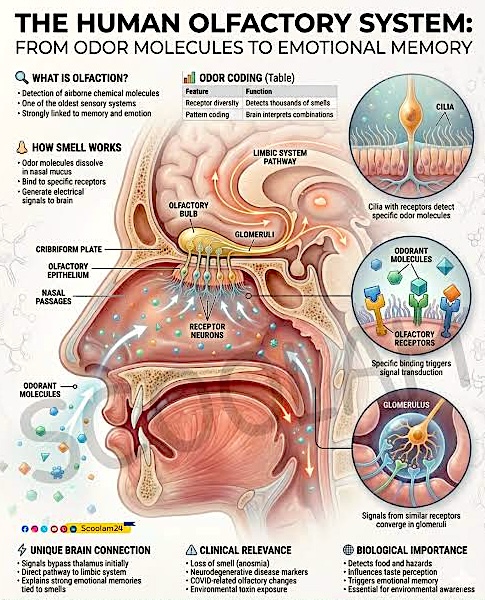
Understanding the biology behind Alzheimer’s may shed light on how the disease begins. Scientists are uncovering more connections between smell and overall health.
For example, researchers at the University of California, Irvine, led by Professor Michael Leon, UC Irvine professor emeritus of neurology and behavior, identified links between smell loss and 139 medical conditions, many involving inflammation. They are investigating whether airborne pollutants and certain bacteria can reach the brain through nasal pathways and contribute to Alzheimer’s-associated changes, including the buildup of amyloid plaques.
Laboratory studies suggest that some airborne bacteria and pollution particles may also reach the brain along these olfactory pathways. The olfactory nerve fibers responsible for smell pass through tiny openings in a thin bone called the cribriform plate, connecting the nasal cavity to the brain.
A Biological Defense
Alzheimer’s disease is widely believed to be caused by accumulating amyloid plaques in the brain, which trigger cascading effects that cause damage. But efforts to reduce amyloid plaques haven’t reversed cognitive decline, causing some to wonder whether something else is going on.
For decades, Alzheimer’s research has focused on the potentially harmful buildup of beta-amyloid in the brain, with some treatments aimed at reducing these deposits. Large pharmaceutical companies have spent hundreds of billions of dollars trying to wipe amyloid from the brain,
Pioneering research at Harvard Medical School revealed why.
Beta amyloid isn’t just an accidental mistake. It’s an ancient antimicrobial peptide that acts as the brain’s emergency immune defense. When particles from pollution, viruses, or bacteria enter through the cribriform plate, the brain tries to protect itself.
One hypothesis is that amyloid accumulation may sometimes begin as a protective response to microbes or other threats. Researchers are investigating whether a persistent immune response could contribute to inflammation and damage over time. This remains an area of study, not a settled explanation for Alzheimer’s disease.
Chronic inflammation takes hold, tau tangles spread, and brain cells caught in the crossfire, you know, begin to die. So Alzheimer’s may not just be an inevitable mystery of aging.
The sticky amyloid plaques that are blamed for Alzheimer’s may actually be the brain’s desperate immune response to try to trap these invaders.
Smell and Increased Risk
In diseases such as Alzheimer’s, a reduced sense of smell can precede memory or movement problems by years. Smell loss alone does not mean someone has either disease, but it may warrant further evaluation.
The blood-brain barrier helps protect the brain from harmful substances in the bloodstream. Yet the nerves responsible for smell pass through tiny openings in the bones of our nose, connecting the nasal cavity to the brain.
Leon notes:
“There’s a phenomenon in Alzheimer’s disease called cognitive reserve, where some people have Alzheimer’s neuropathology and brain damage, but they don’t have memory loss. These people tend to be ones with a high level of education, a cognitively challenging career and a high level of social interaction – adding up to an enriched-environment life filled with novel experiences.”
Thus, researchers are investigating whether certain pathogens can travel along the olfactory route and contribute to Alzheimer’s-related changes before memory symptoms appear.
One key insight is that smell changes may appear before other symptoms become noticeable.
- This research is particularly intriguing because a reduced sense of smell can precede Alzheimer’s cognitive symptoms by years.
- Smell loss alone does not establish an Alzheimer’s diagnosis or prove that the disease begins in the nose. However, studying the brain’s response to potential threats along these pathways may offer new avenues for research into prevention and early intervention.
Researchers from the University of California, Irvine (UCI) have established a direct, alarming link between traffic-related air pollution and the neurological pathways that trigger Alzheimer’s disease.
Led by toxicologist Dr. Masashi Kitazawa and air pollution expert Dr. Michael Kleinman, this research highlights airborne particulate matter as one of the most prominent, modifiable environmental risk factors for cognitive decline.
The findings raise an important question: Could engaging the sense of smell become a useful part of preventive and supportive care? The possibility deserves attention—and careful research.
Olfactory Enrichment
“The brain evolved at a time when there was plenty of olfactory stimulation. Nobody took a shower, ever, so everybody was redolent, and everything around them was odorous. In the world we live in today, you can take a deep breath and smell nothing. There is a big downside to that.” –Michael Leon
As an aromatherapist, I understand how aromas influence our thoughts and feelings. The olfactory system connects directly to brain regions involved in memory and emotion. Unlike other senses, smell signals reach these regions without first passing through the thalamus. These connections have prompted researchers to investigate whether scent stimulation could support memory and cognitive function.
Leon’s research collaborator, Michael Yassa, notes:
“One thing that should be more complex is the array of smells used in memory treatment because, along with needing olfactory stimulation, the brain thrives on novelty.”
Leon and Yassa are exploring whether scent can stimulate the brain’s olfactory pathways to support memory and cognitive function. This work may offer insights into memory care, but whether it can delay cognitive decline in Alzheimer’s or other forms of dementia remains uncertain.
They see promise in a therapy delivered through the air while a patient sleeps, since it’s non-invasive and doesn’t require the person to follow a medication regimen or do self-testing. (Read the published research in Frontiers in Neuroscience.)
Strengthening the Brain Through Scent
Scent can stir long-forgotten memories and bring unexpected emotions to the surface. Familiar aromas can bring comfort and connection, while researchers continue exploring how essential oils may support wellbeing as we age.
Inhaling essential oils changes brain activity. Some essential oils stimulate, others relax, and still others have different effects. Researchers have studied the physiological effects of aromatic essential oils, from brain activity to blood pressure and cardiac rhythm, but the more subtle impact of odors on our minds is just beginning to be mapped.
Scent stimulation engages olfactory pathways connected to brain regions involved in memory, including the hippocampus.
Olfactory neurons are among the only nerve cells in the human body capable of neurogenesis, meaning they can regenerate and form new connections throughout your adult life.
Studies like the UC Irvine Olfactory Enrichment Study have shown that diffusing rotating essential oils during sleep can significantly boost memory performance in older adults.
The UCI Center for the Neurobiology of Learning & Memory conducted the project and used seven essential oils—rose, orange, eucalyptus, lemon, peppermint, rosemary, and lavender—with a test group of men and women aged 60 to 85 without memory impairment.
Older adults in the olfactory enrichment group were exposed to the scents via an automated diffuser in their bedrooms for two hours each night while they slept.
After six months, researchers reported a 226% improvement on a specific memory measure in the scent-enrichment group compared with the control group. Brain imaging also revealed changes in a memory-related pathway. These findings are promising, but further research is needed to understand their implications for cognitive health.
For those of us caring for an aging parent or spouse, or thinking about our own brain health, this research offers a reason to stay curious while keeping expectations grounded.
Sensory Caregiving

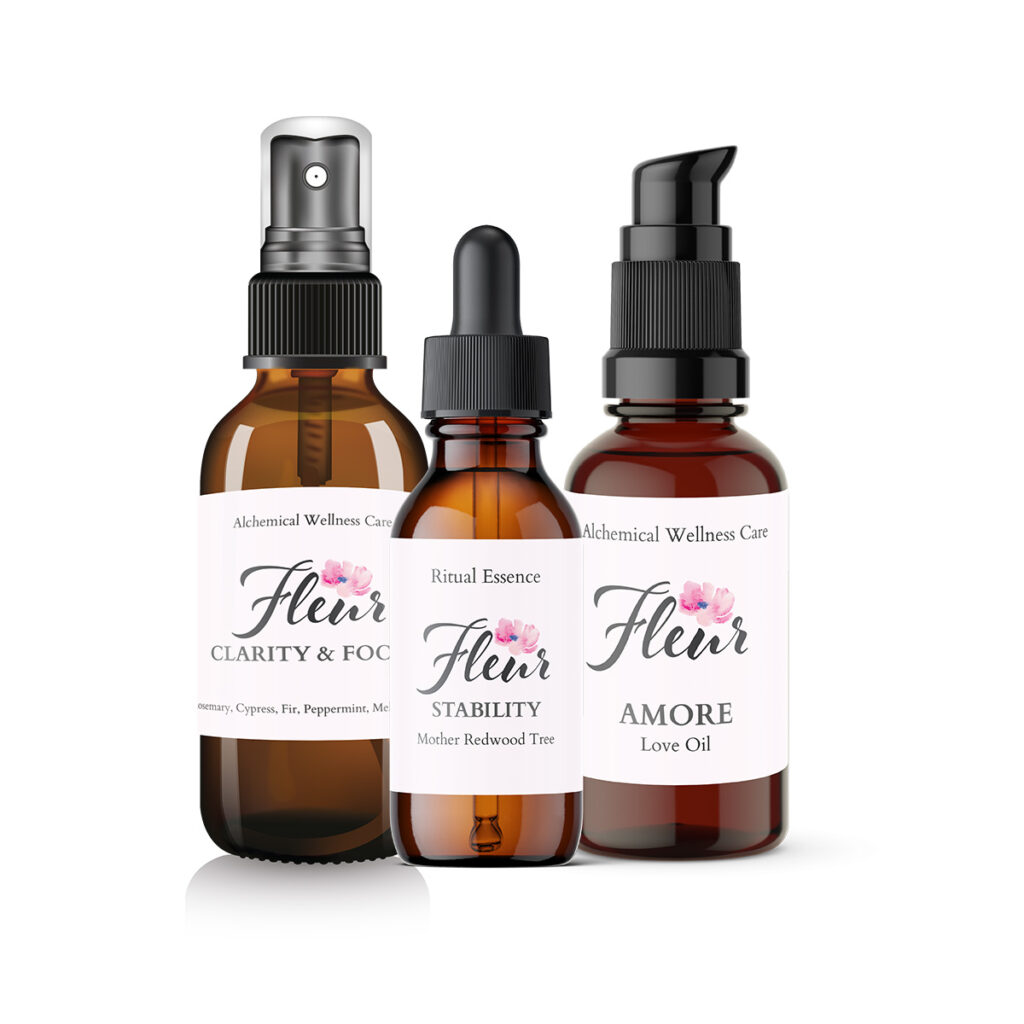
What’s in Our Memory Care Kit
Clarity & Focus Spray is a carefully crafted blend of flower essences and organic essential oils infused in spring water with 1% organic biodynamic alcohol. The uplifting, refreshing fusion of Lemon, Basil, Coriander, Rosemary, Cypress, Fir, Peppermint, Melissa, and Vetiver supports executive thinking.
Misting around the head and body, or spraying a pillow and inhaling the scent, increases alertness and helps focus attention, supporting older adults with cognitive decline, memory problems, and various forms of dementia.
Our Spray is safe to use in study environments with children and adults living with dementia.
Amore Love Oil, made with organic rose otto essential oil, infused in organic jojoba oil, is intended to offer a comforting sensory experience in senior and memory care settings. Rose otto’s multi‑layered aroma features floral‑honey notes with subtle spicy undertones.
When applied to the skin and inhaled, its wide range of natural compounds work together. It can help calm anxiety, steady mood, indirectly improve brain fog, ease emotion‑related forgetfulness, and improve sleep.
Lastly, I’ve added Stability Vibrational Essence to our Memory Care Kit. We made it in a group of majestic coastal redwoods known as a ‘fairy ring’ in the Santa Cruz Mountains, California. Traditionally, we preserve this essence in organic biodynamic brandy. To use, take four drops under the tongue or in water, or apply four drops to the crown of the head.
Within this spiritual framework, this ritual essence provides energetic stability by aligning the subtle body more closely with the emotional body.
- Supports mental-emotional balance and increased life force, vitality, and balance within the physical body.
- Helps dissolve feelings of being unsupported, scattered, or lost.
- Associated with cultivating patience, warmth, and a sense of presence and belonging.
Important disclaimer: Fleur products are aromatic support products, not medicine.
Take Early Action
November is National Alzheimer’s Disease Awareness Month. Changes in smell deserve attention. If familiar aromas become harder to recognize, or a loved one notices that food tastes unusually bland, don’t simply dismiss it as aging. Speak with a healthcare professional about possible causes and whether olfactory testing is appropriate.
Alzheimer’s Awareness encourages catching these sensory changes early, which could provide a vital window to improve indoor air quality, optimize sleep, and exercise brain circuits years before memory loss begins.
You don’t need to wait for research to answer every question to make room for comfort and connection. The Fleur Alchemical Wellness Memory Care Kit offers aromatic sensory experiences for everyday caregiving. Consider it a way to enrich a shared ritual—not a proven way to prevent or treat Alzheimer’s disease.
Alzheimer’s disease has a history marked by heartbreak, courage, and perseverance. Aromatherapy is not a treatment or cure, but it can complement thoughtful sensory care alongside appropriate medical guidance. The goal is not to promise protection—it is to make everyday care more attentive, personal, and compassionate.
If you or a loved one notices changes in memory or smell, start by talking with a healthcare professional. Then make room for small acts of connection: a familiar aroma, a shared ritual, a hand held with love. We may not have every answer, but we can meet each other with compassion and dignity.
Remembering My Mother Catherine 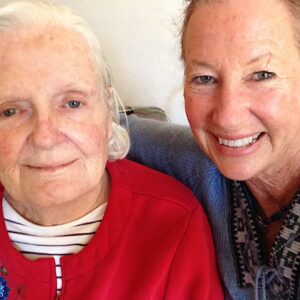
Before her disease, my mother, Catherine, was bright, intelligent, and fiercely independent. She was curious and loved to travel. Watching her decline over the years affected my sisters and me profoundly.
I am grateful for the time I had to love her in her final years. What I cherish most from those years is the deep connection we shared as we held hands and gazed into each other’s eyes, affirming our love.
Catherine is deeply missed and lovingly remembered. Her spirit lives on in me, my daughter, and my granddaughters.
All my love and aromatic love,
Vidya